Private Ranch vs. Free-Ranging Buffalo Hunts: What’s the Difference?
Buffalo Hunting on Private Ranches vs. Public Land: What to Know Before You Book
A buffalo hunt is something plenty of hunters think about for years. But once you start looking into booking one, you’ll find there are two very different ways to make it happen: apply for a wild, free-ranging bison permit or book a private ranch hunt. Both offer the chance to pursue American bison, commonly called buffalo. The biggest differences come down to access, scheduling, cost, and how much uncertainty you’re willing to work around. If you want to choose your dates and start planning a hunt you can actually put on the calendar, a private ranch is often the more practical option.
What Is a Private Ranch Buffalo Hunt?
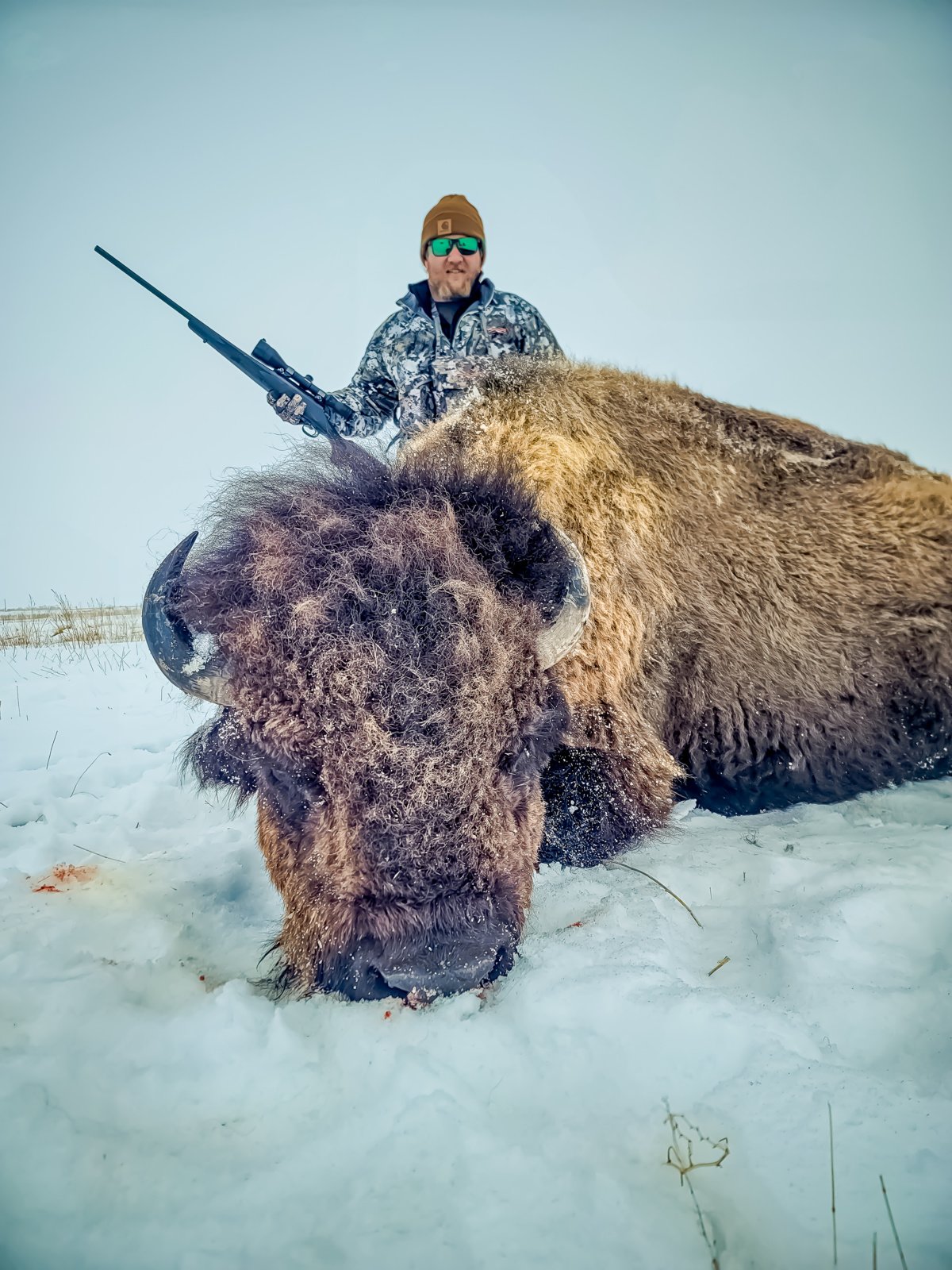
A private ranch buffalo hunt takes place on private property with a managed herd. You work directly with the outfitter to select an available hunt, discuss the type of animal you’re looking for, and reserve your dates. The experience varies from ranch to ranch, so ask about acreage, terrain, and how the hunt is conducted. A ranch hunt might involve covering rolling country with a guide, or it may be a more closely managed harvest. Knowing those details beforehand helps you book the experience you want.
What Is a Free-Range Buffalo Hunt?
Free-ranging hunts pursue wild bison that move through larger landscapes rather than a privately managed ranch herd. Opportunities exist in states including Wyoming, Utah, Montana, Arizona, and Alaska, although each has its own permit system and restrictions. One distinction matters here: publicly managed doesn’t always mean unrestricted, wide-open hunting. Some public hunts take place in managed wildlife areas or parks. Custer State Park, for example, offers bison management hunts with an authorized guide locating eligible animals. That’s a different experience from pursuing a free-ranging herd in remote country.
Also, drawing a wild bison permit doesn’t automatically give you access to every property inside the hunt boundary. Private land permission and additional access permits may still be required.
How Do You Apply for a Free-Range Buffalo Tag?
Start with the wildlife agency’s current regulations. Create an account, confirm your residency and eligibility, review the available hunt codes, and check the legal animal and season dates. Then purchase any required prerequisite license and submit your application before the deadline.
Wyoming Bison Hunts
Wyoming’s 2026 bison application period ran March 2–April 30, with results scheduled for May 21. Applicants select the appropriate hunt area and license type through the Game and Fish online application system. Bison do not have a preference-point application period, so this isn’t a situation where buying points every year eventually moves you to the front of the line. Wyoming Game & Fish Department Wyoming requires the full license amount and applicable charges when applying, with the license fee refunded to unsuccessful applicants. A successful Type 1 bison draw is considered once in a lifetime, regardless of whether the hunter harvests an animal. Hunting the National Elk Refuge also involves a separate access-permit step.
Utah Bison Hunts
Utah’s 2026 main big game application window ran March 19–April 23. You need a valid Utah hunting or combination license to apply, then select the bison hunt you want through the state’s drawing system. Utah uses bonus points for its once-in-a-lifetime bison drawing, and unsuccessful applicants can build points toward future applications. Points improve your position, but they don’t promise a particular year.
Montana Bison Hunts
Montana’s bison application deadline is May 1. Applicants need Conservation and Base Hunting licenses before applying for the special drawing. Successful either-sex applicants receive instructions for the online bison orientation. The current bison license costs $125 for residents or $1,250 for nonresidents, plus the respective $10 or $50 nonrefundable application fee and prerequisite licenses.
Arizona Bison Hunts
Arizona offers bison opportunities through its spring and fall drawing cycles. Applicants use an AZGFD account, maintain the required valid hunting license, and enter the correct hunt numbers. The fall 2026 deadline was June 2; the spring 2027 deadline was October 6, 2026. Arizona Game & Fish Department Arizona uses bonus points, and its drawing includes a bonus-point pass and nonresident limits. Research the individual hunt before applying: Kaibab Plateau hunts and the Raymond or House Rock wildlife-area hunts have different conditions and expectations.
Alaska Bison Hunts
Alaska accepts drawing applications online during its November–December application period. You need a qualifying hunting license, and bison entries cost $10 each, with up to six entries per species. You can spread those entries across eligible hunts or enter the same hunt multiple times. Alaska uses a random drawing rather than a point system.
For perspective, the 2026 Delta either-sex hunt, DI404, listed 85 total permits shared by resident and nonresident applicants. Successful hunters also have assigned starting dates, orientation requirements, and responsibility for securing any necessary private land permission.
How Hard Is It to Draw a Buffalo Tag?
There isn’t one nationwide draw percentage. Your chances depend on the state, hunt code, residency, permit quota, applicant demand, and sometimes your point total. Wyoming awards 3 bison tags per season, with draw odds at 0.6%. Odds for Arizona units range from 0.1-2%. Utah has lower odds of drawing at 0.2%.
The practical takeaway is that a public bison draw should be treated as an uncertain opportunity, rather than a guaranteed future reservation. In a random system, years of unsuccessful applications don’t necessarily bring you closer. Even after drawing, finding an accessible animal and completing the hunt remain separate challenges.
What Does a Private Ranch Buffalo Hunt Cost?
Prices vary by ranch and location, but our prices are as follows:
Buffalo cow $4,595
Small bull $6,495
Medium trophy $8,395
Trophy bull $10,395
The listed package includes lodging, food, guides and field transportation. Processing, field dressing, the 6.5% sales tax, and staff gratuities are additional. Hunts run from early December through February, across approximately 7,000 acres. Confirm current rates and inclusions when booking.
Is a Free-Range Hunt Cheaper?
Sometimes, especially for a resident hunting close to home. But comparing a public tag price with a guided ranch package doesn’t tell the whole story. Wyoming currently lists a $6,002 nonresident any-bison license, before the separate application charge. Utah’s current standard nonresident bison permit is $4,840, including a 365-day fishing license; Antelope Island is higher. Those prices alone can approach or exceed the starting price of a private ranch package.
Then add travel, lodging, food, scouting, transportation, and any guide or recovery assistance. A do-it-yourself hunt can still cost less, but a remote trip or several return visits can change the budget quickly. Private ranch pricing is appealing because more of those arrangements are settled before you leave home.
Budgeting for Butchering, Processing, and Taxidermy
Getting the buffalo down is only part of the expense. You’ll also need a plan for turning a very large animal into packaged meat and preserving the head or hide if you want them. Our processing estimates are:
Cow 230–280 pounds $800–$1,000
Small bull 260–300 pounds $850–$1,050
Medium bull 320–390 pounds $1,100–$1,300
Trophy bull 420–540 pounds $1,300–$1,600
Taxidermy is a separate decision. The costs ranges from $2,000-5,000 for a bison shoulder mount. European mounts without a plaque at $275–$350. Ask about caping, hide tanning, freight, taxes, deposits, and turnaround time before choosing a mount.
Plan Your Buffalo Hunt with Northern Plains Outfitters
A free-ranging buffalo hunt can be a rewarding goal, especially if you enjoy researching draws and tackling a less predictable trip. But you don’t have to wait on a lottery to plan a buffalo hunting experience.
For hunters who want clear package options, scheduled dates, and help with the details, a private ranch hunt makes a lot of sense. Contact us to discuss available packages, confirm a complete estimate, and get your South Dakota buffalo hunt on the calendar.